About the film
A league at the end of the road
A documentary about the players of Kakuma Refugee Camp, who train every day for a chance that could change their lives.
About the film
A documentary about the players of Kakuma Refugee Camp, who train every day for a chance that could change their lives.
Synopsis
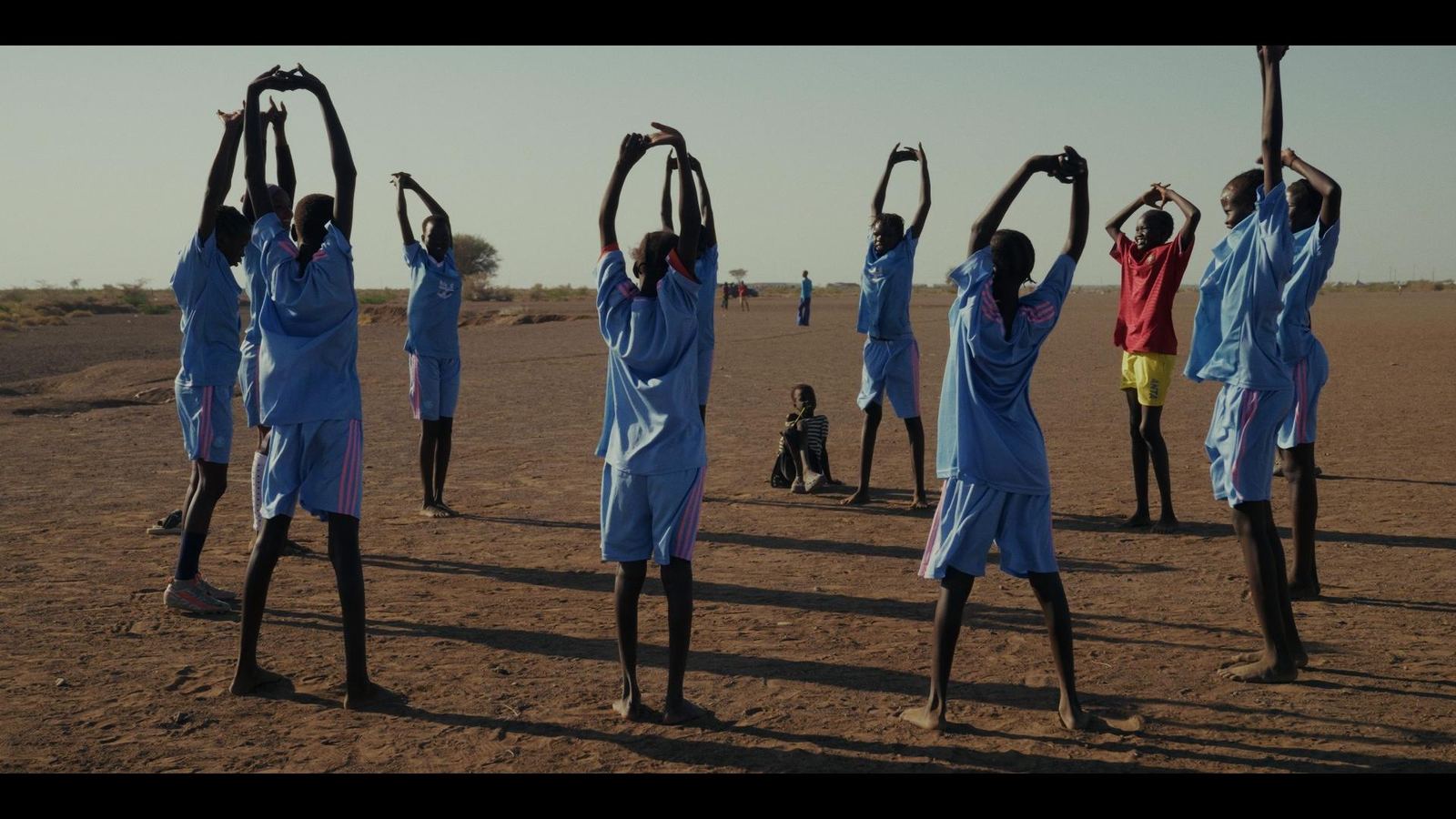
Kakuma Refugee Camp was built in 1992 to hold the Lost Boys of Sudan for a few months. Thirty-four years later, more than a third of a million people from twenty countries live there. The camp has ninety-four football pitches of packed soil and loose stone, and not a blade of grass. Its residents may not travel more than twenty-five kilometers (about fifteen miles) without a permit, and for most of them the only way out they can see is football.
Everyone knows the route by heart. A boy is spotted in a community team, promoted into the Kakuma Premier League, scouted into Kakuma United, and taken down-country to play professionally in Kenya. Everyone in the camp can name the handful who made it. Almost nobody does.
The film follows its players through training, trials, ration queues, and matches played in 106°F (41°C) heat. Their teams will compete in the league and cross into Uganda for the Ateker Cup of Nations. For most of the players, it will be the first time they leave the country they fled to. Some will rise. Most will not, and the film does not pretend otherwise. What it finds instead is what one former player tells the boys he now coaches: “I didn’t make it. But one of you will.”
The place
Kakuma sits in Turkana, in northern Kenya. It is semi-arid desert, a region Kenyans themselves describe as a land nothing good comes from.
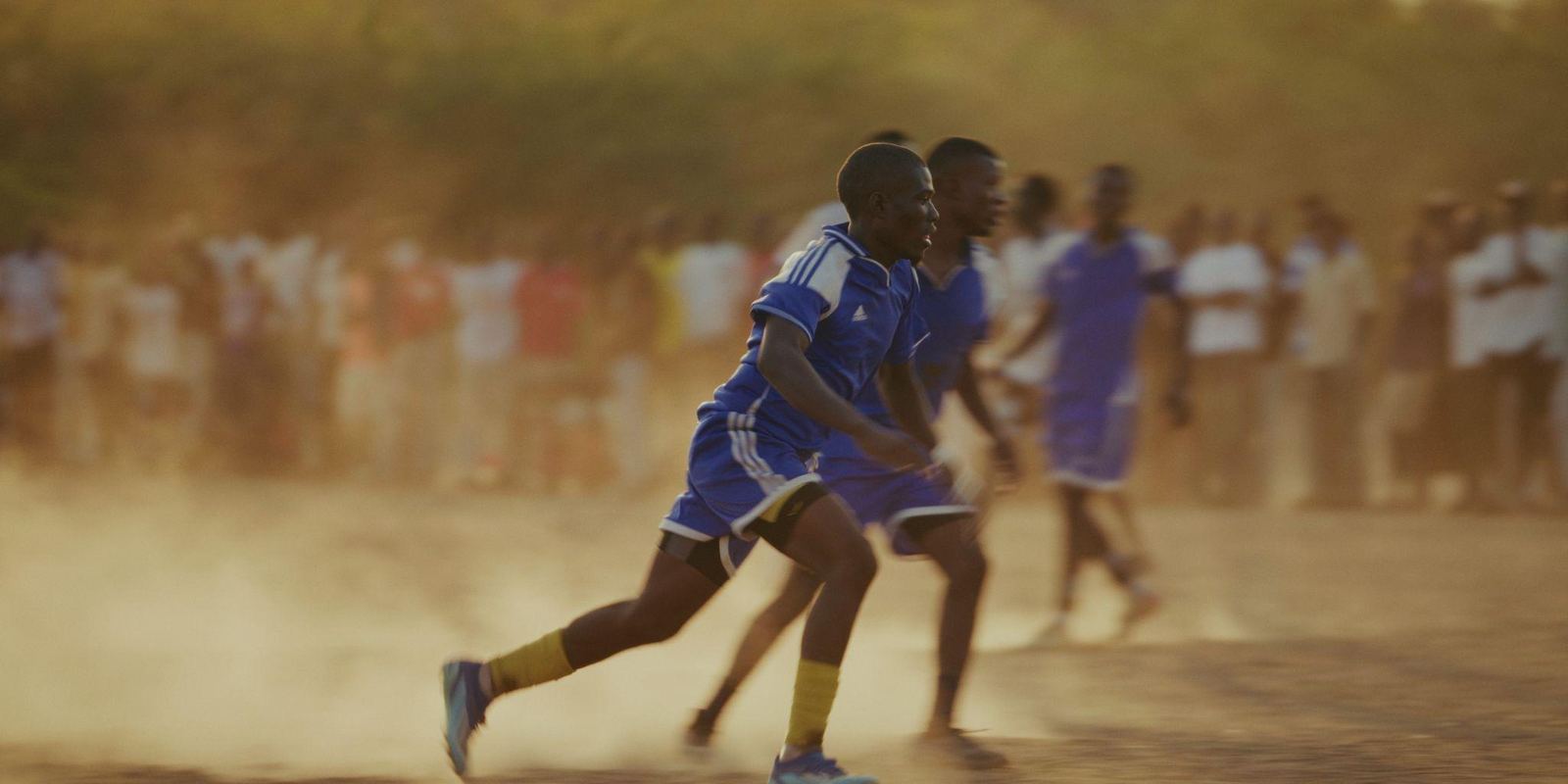
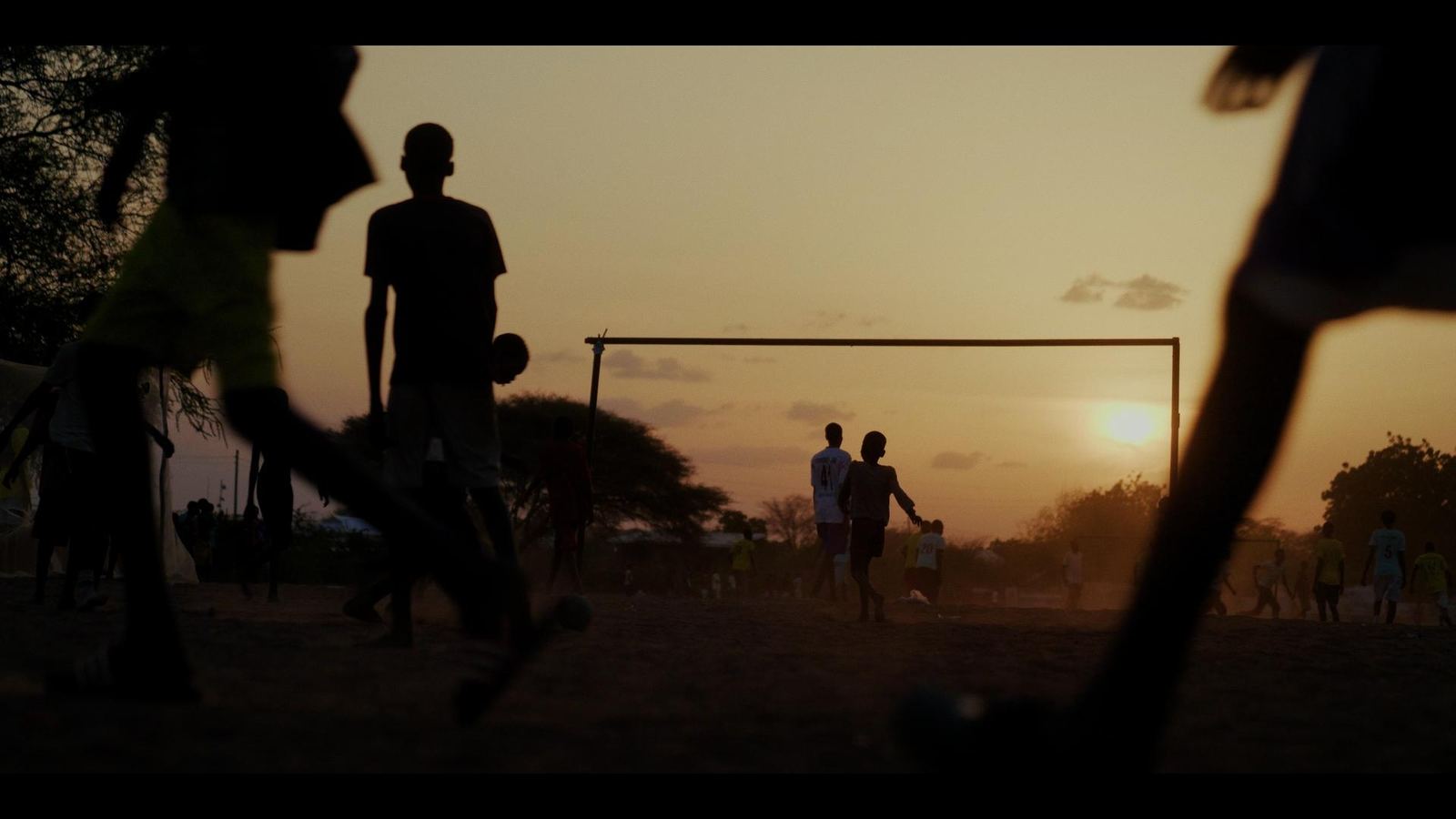
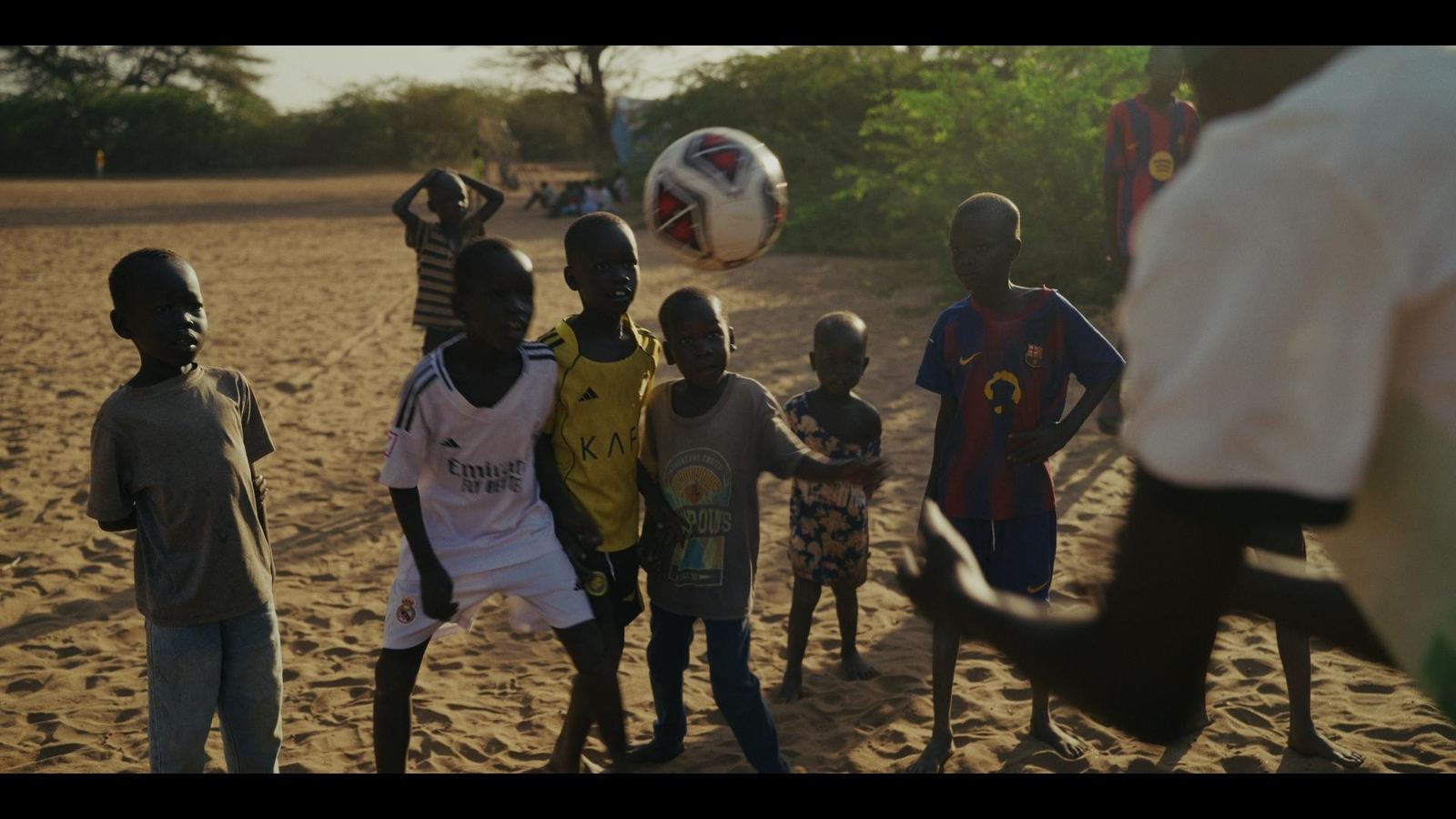
The pitches are brutal: packed soil, loose stone, and thorn trees, with no grass anywhere. A bad fall can cost months and is treated with hot water and salt, because there is nothing else.
Movement is restricted, so a trial in Lodwar is a logistical operation, and a contract abroad is nearly out of reach. Food arrives on a schedule that never quite matches the month. Even the ration queue has its own architecture: men in one line forcing their way forward, women in another, which is why the players send their sisters.
The day starts early, before the heat, with water to fetch and work to do at home.
The middle of the day is surrendered to the heat. Nobody trains until it breaks.
Once the worst of the heat has passed, all ninety-four pitches fill.
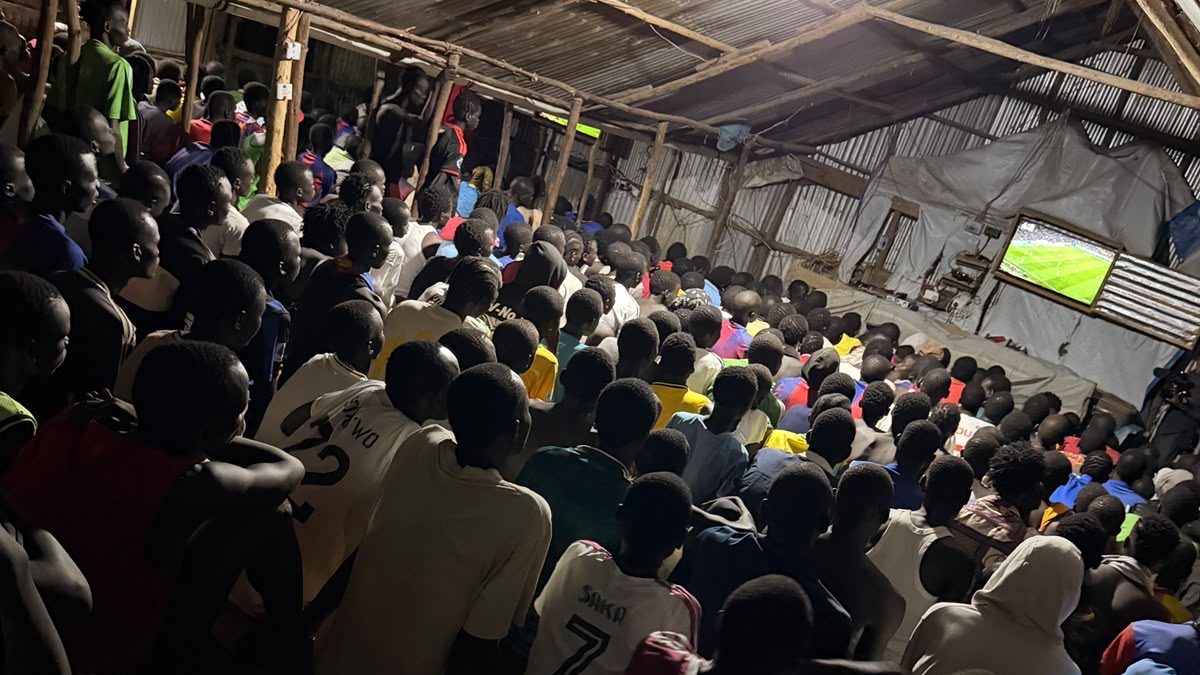
The whole camp gathers around shared screens to watch the games from abroad.
Kakuma Premier League & Kakuma United
The Kakuma Premier League is the camp’s own professional structure. Sixteen clubs drawn from every zone of Kakuma and Kalobeyei play a full season for kit, boots, and the chance to be watched. Every kid in Kakuma dreams of joining it.
Kakuma United is the camp’s one club in Kenya’s official national leagues. It is picked from the best players in the Kakuma Premier League and from open trials, and it mixes refugees with players from the local Turkana community. The club went thirty-six games unbeaten to win Kenya’s Division Two, and it now plays in Division One, the second-highest league in the country. Women have their own all-star team, Kakuma Kalobeyei Stars, known as KK Stars.
Being picked is one of the very few legitimate reasons a refugee is granted a permit to board a bus and leave. In the camp, people call it the moment dreams come true.
“You never know who is watching from outside.”
“I don’t know where this football will take me. But I know one day it will.”
“You do your best. God does the rest.”
A few who made it: Madog (Kenyan Premier League) Feli (Germany) Pisco (Division One)
No team in the league may be built from a single nationality or ethnicity. In more than a decade, no conflict in Kakuma has ever begun at a football match.
Visual concept
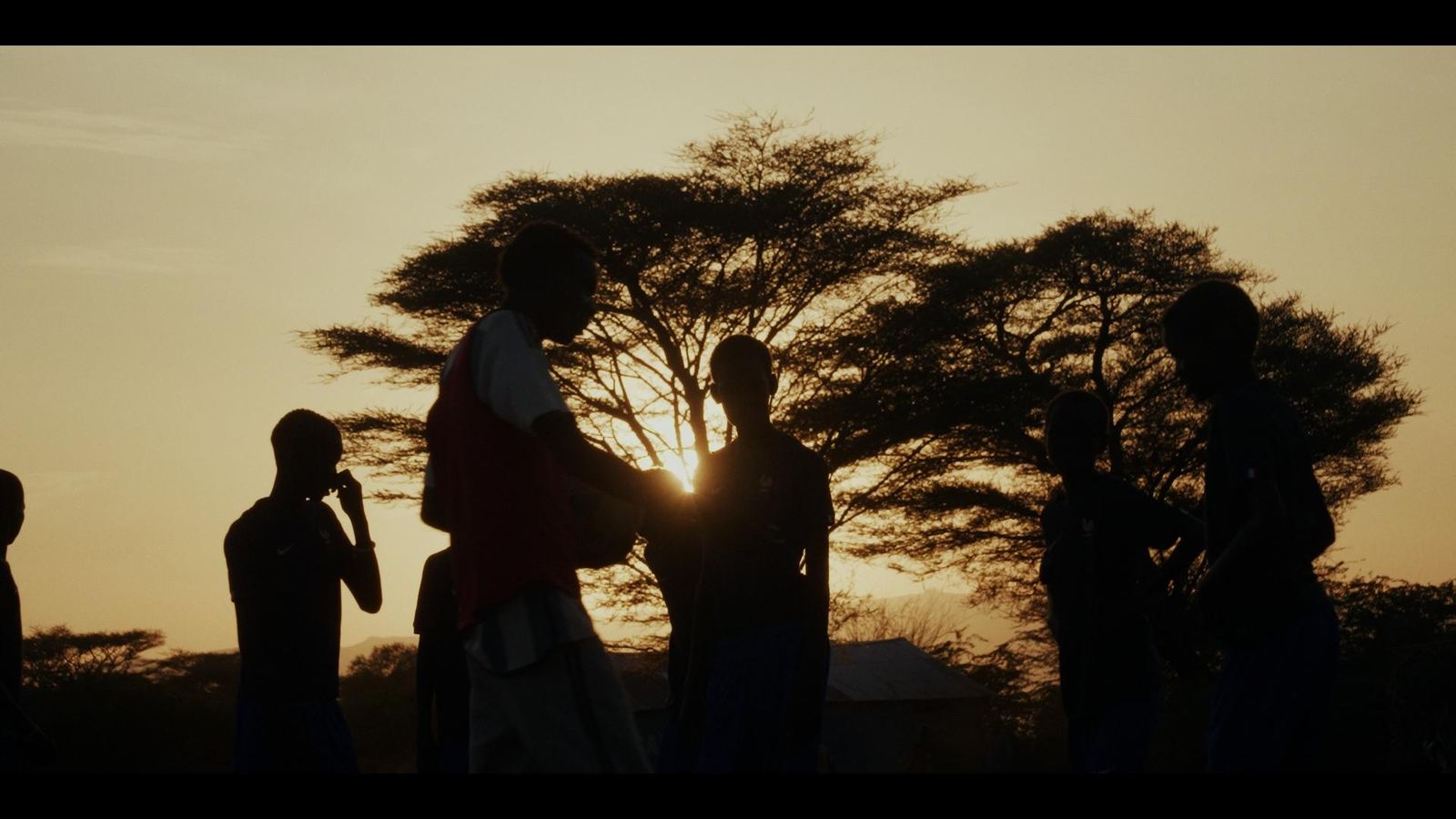
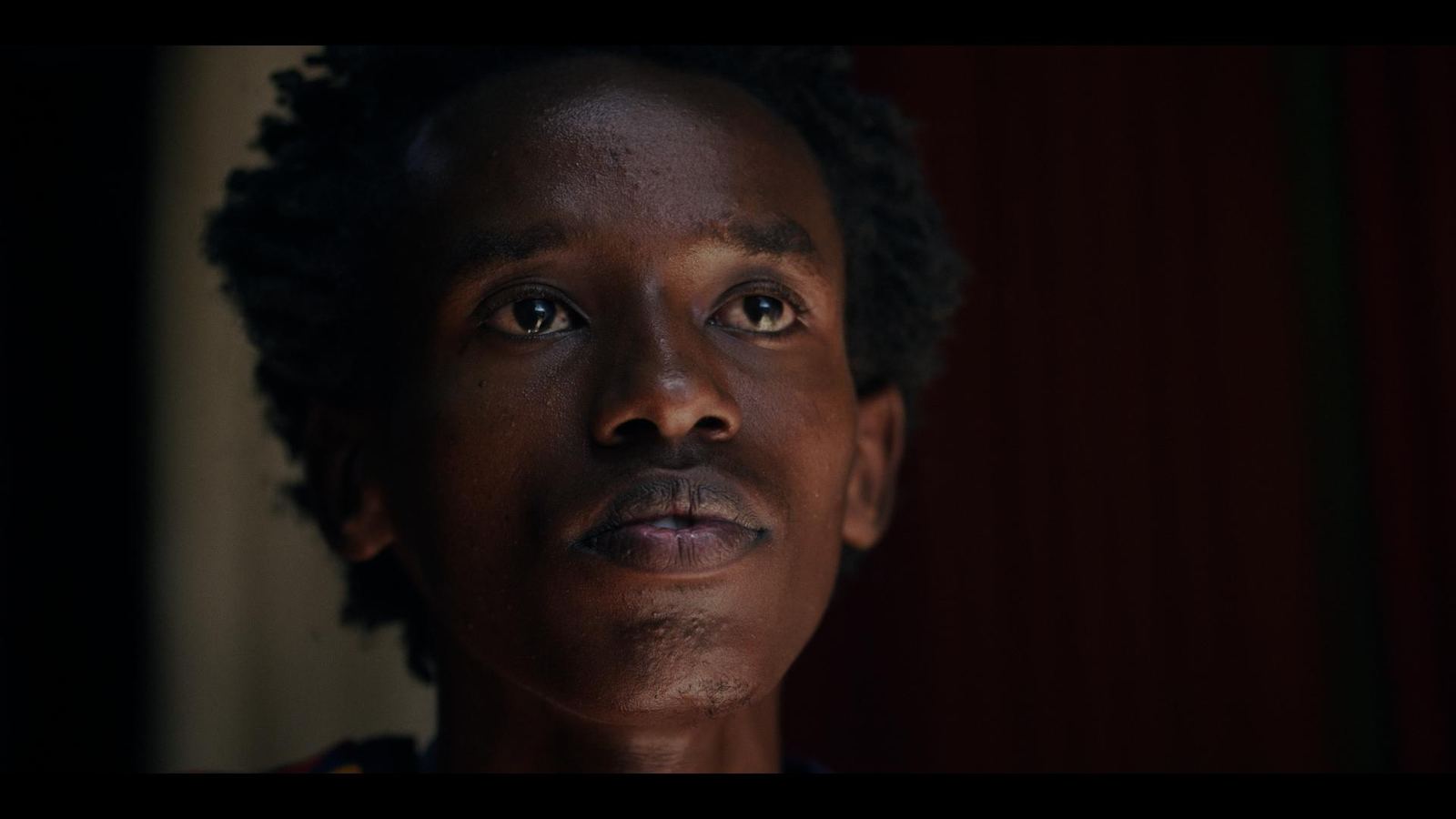
Shot in an intimate verité style: handheld, close, and patient, living inside the compounds and training sessions rather than visiting them. The matches are filmed like televised football, because the distance between how the game feels to the players and how the world sees it is the film’s subject.
Interviews in Swahili, Nuer, Lingala, and Arabic are subtitled, never narrated. Woven through is material the players shoot themselves on their phones, a second, self-authored layer. The score is built from East African instrumentation against minimal contemporary texture.
From the filmmakers

“The camera should not search for misery. It should search for truth.”
What draws me to Kakuma is the contradiction at the heart of the place. It was built as a temporary shelter, but for many people it has become their entire life. Children are born there, grow up there, fall in love there, become parents there, and still live with the idea that their lives are somehow on hold.
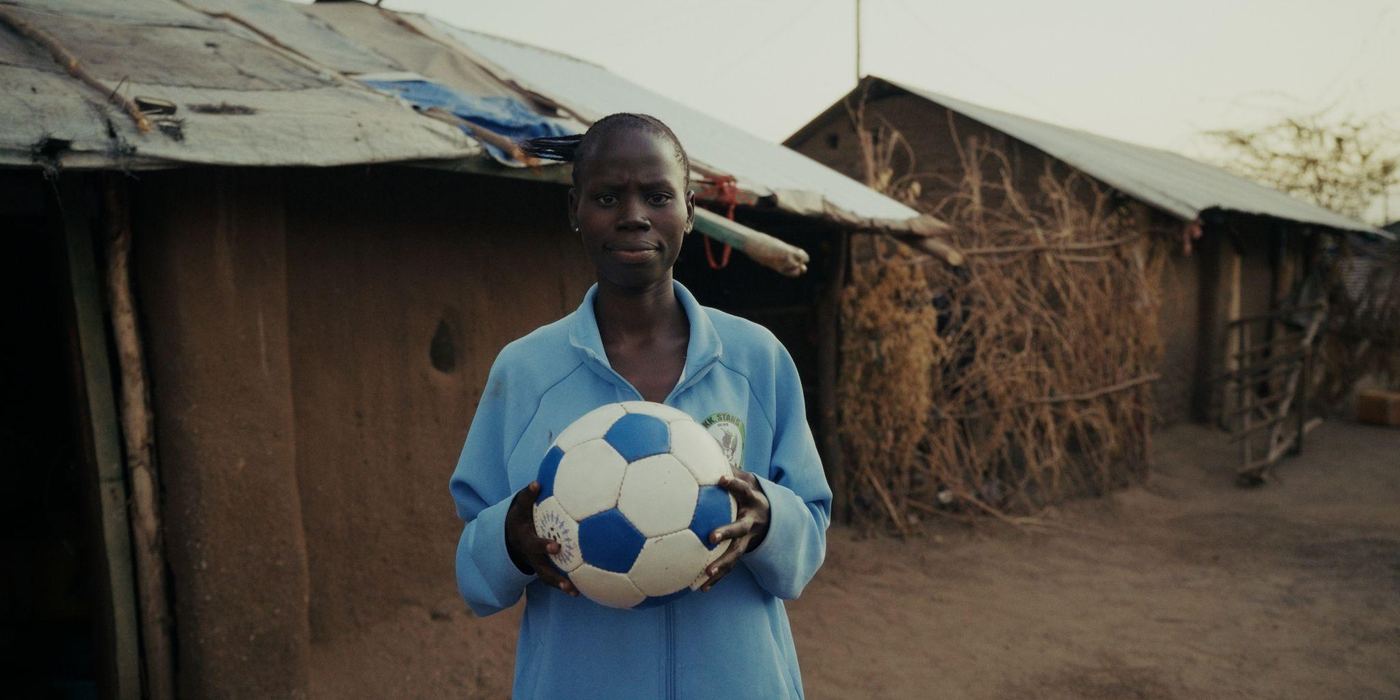
Football gives us a way into that intimacy. On the pitch, people who are often seen only through the word “refugee” become players, rivals, captains, talents, mentors, and dreamers. Champions of Nowhere is a film about people who carry a painful past, live in a restricted present, and still search for a future. Football is the common language that lets us meet them. Not as symbols. Not as victims. As human beings.

“I knew Kakuma as a name and a headline, but not as a lived world.”
I have been traveling to Turkana since 2017. Several crew members on NAWI came from Kakuma. During breaks, they shared stories about home in vivid detail: how people organize their days, how rumors travel, how faith, football, fear, and responsibility sit next to each other. Their stories marked the beginning of this project.
The film is not about football as a fairy-tale escape. Football becomes a glimpse of something else. Sometimes hope. Sometimes a possible way out. Often simply joy. A place where a person can be more than their status.
Champions of Nowhere is independently produced. Your gift helps finish the film and bring it back to Kakuma for community screenings.
News from Kakuma, the edit, and the first screenings. A few emails a year.